

The US India Artificial Intelligence Initiative, launched on 17 March 2021 by the Indo-US Science and Technology Forum, aims to deepen AI cooperation between the two countries. Analysts quoted at the time saw it as mutually beneficial, with India gaining technology and development support and the US gaining a strategic partner, while raising open questions about data protection and regulation.
Prof Ashutosh Sharma, then Secretary of India’s Department of Science and Technology, noted that the long history of Indo-US cooperation in science and technology had benefited both countries. The initiative extends that history into artificial intelligence. Geopolitics experts who spoke to Analytics India Magazine discussed what India could gain from the partnership.
Key takeaways
- The initiative was launched on 17 March 2021 by the Indo-US Science and Technology Forum.
- Commentators described it as a win-win: India brings engineering talent and a very large consumer market, and the US brings technology and a strategic ally.
- Concerns centered on data protection for Indian citizens and on balanced regulation of large technology companies.
- Analysts linked the cooperation to shared concerns about China’s role in emerging technology.
Why does AI matter in international relations?
Technology has become a core part of modern geopolitics, and AI holds a prominent place in that picture. According to the analysis in the original coverage, the Indo-US initiative strengthens collaboration in areas such as defense and healthcare. It was compared with India’s other technology partnerships, including defense work with Russia and research on 6G with Finland.
India is at an early stage with AI, and cooperation with the US in science and technology could speed up progress. At the time, India did not have a firm position on the norms that should govern AI.
Arindrajit Basu of the Centre for Internet & Society said outcomes were hard to predict because India’s priorities were not yet clear. He also pointed to bilateral and multilateral efforts, such as the US India initiative and the Global Partnership on AI (GPAI), as making Indo-US cooperation clearer. The Quad was mentioned as another channel for security-related technology cooperation.
What does each country gain?
- What India brings
- Engineers and computer scientists, along with a very large consumer market that generates data.
- What India seeks
- Technology and support to address development problems, from healthcare to banking access for a large population, and to strengthen its military.
- What the US brings
- Advanced technology, algorithms and support for India’s global presence.
- What the US seeks
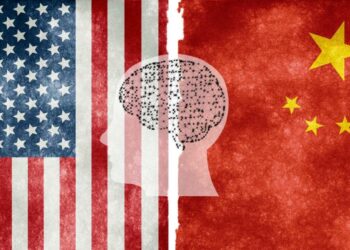
- Allies that share a democratic governance model for emerging technology, and partners to counter China’s growing role in AI.
Commentators described the arrangement as a win-win. New geopolitical realities made the partnership possible, and both sides favor supply chains governed by the rules and standards of the democratic world. They also noted that US distrust of China and its technology continued despite the change of government in Washington.
How could the partnership change India’s position?
The analysis suggested that India is moving away from its traditionally non-aligned stance and toward closer technology ties with the West. AI is expected to reshape relationships between nations, and India could use the opportunity to expand its capabilities.
One idea raised was to build AI corridors with Southeast Asia, using India’s own algorithms and expertise. Such links could give India new geopolitical influence, and groupings such as the Quad or the Five Eyes were suggested as possible vehicles. A commentator named Prakash cautioned that India could face challenges in Southeast Asia because of rising competition among major powers.
What are the concerns about data and regulation?
A key concern was how to protect Indian citizens from exploitative data practices, whether by US firms or by those from other large economies. Basu said Indian citizens’ interests need protection without triggering a regulatory conflict. The aim was proactive regulation that protects data privacy, curbs unfair mergers and anti-competitive practices, and begins with equitable taxation of these companies.
There was also a risk of losing investment and collaboration if regulatory processes were unclear, extreme or counterproductive. According to Basu, the final shape of the cooperation depends on regulation that is fair and transparent. It should protect citizens’ rights without unduly harming businesses.
Frequently asked questions
What is the US India Artificial Intelligence Initiative?
It is an AI cooperation initiative launched on 17 March 2021 by the Indo-US Science and Technology Forum. It builds on a long record of bilateral cooperation in science and technology.
Why is the partnership called a win-win?
Commentators argued that India contributes talent and a large consumer market, and receives technology and support for development. The US gains an ally for shaping emerging technology on democratic principles.
What are the main risks mentioned?
The main concerns were protecting citizens from exploitative data practices and avoiding regulation that is so heavy it deters investment.
Does the initiative relate to China?
Analysts quoted in the original coverage linked it to shared concerns about China’s development in AI and a preference for democratic governance of technology.
Conclusion
The Indo-US AI initiative was framed as a mutually beneficial step that could strengthen technology, defense and healthcare cooperation. Its long-term success was expected to depend on fair regulation, strong data protection and clearer Indian priorities on AI governance.