
Free Quiz
Write for Us
Learn Artificial Intelligence and Machine Learning
  • Artificial Intelligence
  • Data Science
    • Language R
    • Deep Learning
    • Tableau
  • Machine Learning
  • Python
  • Blockchain
  • Crypto
  • Big Data
  • NFT
  • Technology
  • Interview Questions
  • Others
    • News
    • Startups
    • Books
  • Artificial Intelligence
  • Data Science
    • Language R
    • Deep Learning
    • Tableau
  • Machine Learning
  • Python
  • Blockchain
  • Crypto
  • Big Data
  • NFT
  • Technology
  • Interview Questions
  • Others
    • News
    • Startups
    • Books
Learn Artificial Intelligence and Machine Learning
No Result
View All Result

Home » People are using AI to make expensive computer programs free. This could change everything

People are using AI to make expensive computer programs free. This could change everything

Tarun Khanna by Tarun Khanna
October 29, 2026
in Artificial Intelligence
Reading Time: 4 mins read
0
People are using AI to make expensive computer programs free. This could change everything

Image Credit: https://techxplore.com/

Share on FacebookShare on TwitterShare on LinkedInShare on WhatsApp

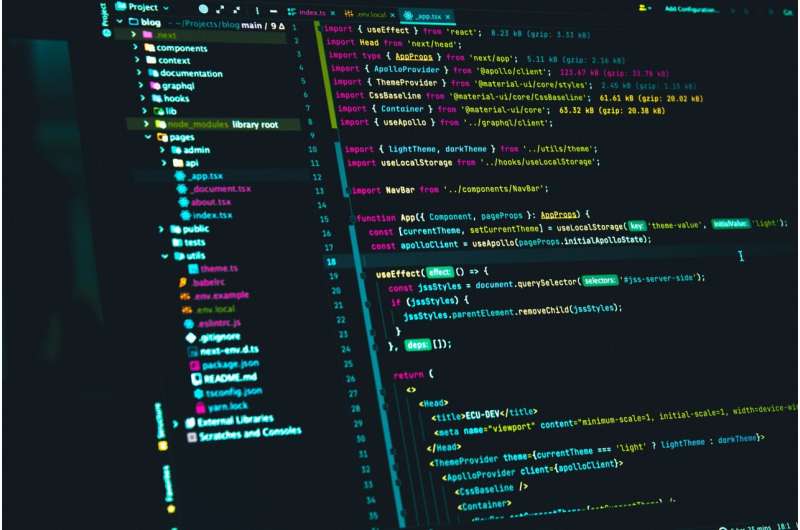
One of the earliest uses of generative artificial intelligence (AI) tools like ChatGPT and Claude was producing source code—computer language instructions that make up software which include word processors, your internet browser and everything else.

Code is structured, which makes its easier for AI tools to generate.

So could support to make fancy software we generally need to pay for? Enter reverse engineering: using AI tools to interrupt a piece of software down into component parts and then construct code to copy those parts.

Also Read:

AI model hunts down fake news

U.S. Bans DeepSeek From Federal Agencies Over AI Security Risks

U.S. Navy Expands AI Robotics Contract to $300 Million for Fleet Maintenance

Google opens up latest AI models to 200 European researchers

Unlike vibe coding, wherein you tell AI what you want a piece of software to do and it tries to create it, reverse engineering works more effectively for large, complex programs.

In recent weeks, one software engineer used AI tools to produce what are essentially free versions of Microsoft Office and Adobe programs. Adobe is the maker of Photoshop. To make things more interesting, a freely available AI tool referred to as Reverse Engineer Anything has gone viral in coding circles.

Why should you care? Some people are hailing this as a return to the early days of the internet when software was free—both to use and to adapt.

Even if we don’t go that far, this new development really poses questions about how for-profit software will work in the future.

The cool kind of weird

In the early days of the internet, there has a cool kind of weird. In the 1990s, the internet seemed to provide endless possibilities, and no had discovered the way to monetize it yet. People spent a lot of time talking to strangers about their niche interests on chat forums and growing badly designed websites to share data with others.

Lots of software was free or open source. That meant if a piece of software didn’t function quite the way you wanted, you may download the source code and tinker with it till it did. Often, you’d do this with support from the internet, wherein technology searches were the second most common search topic.

It seems nearly impossible to imagine now, however Google didn’t exist but. Microsoft did, and fast have become the best-known proponent of for-profit software program: programs you have to buy and cannot tinker with yourself.

The 1990’s were consequently a battleground between free and open-source software, readily available to tinkerers, and for-profit software , of which Microsoft was the most vociferous manufacturer.

The birth of ‘big tech’

In late 1998, for-profit software got considerable protection in the form of the U.S. Digital Millennium Copyright Act (DMCA). It made it illegal to try to attempt the break that locks that prevent tinkering. The future of for-profit software was secured.

And the internet went mainstream, no longer a clubhouse populated by using early adopters. You didn’t ought to be as “tech savvy” to buy for and use computer programs.

It was also the starting of the companies now called “big tech”: Microsoft already existed, Amazon (having begun in 1995) have became profitable in 2001, Google released in 1998 and Apple eventually went from niche, struggling computer company to a tech juggernaut after the release of the iPod in 2001 and, later, the iTunes Music Store. Facebook, the last of the original tech giants, released in 2004.

All of a sudden, free and open-source software was something used only via the technically adept. Developing it was a special interest. It was not possible to remix or improve or personalize most software, because accessing the underlying source code was technically difficult and illegal.

A new reverse-engineering utopia?

Arguably, as of reverse engineering does not break any locks, it may not infringe the DMCA, though this may face legal challenges.

Integrated with vibe coding, this new era of AI-powered for-profit software clones could be the starting of a time when everyone will have their most longed-for function in Excel.

All is not as it seems on this new utopia, although. Some of the software being formed is already reported as having weird bugs. Those bugs are probably to be hard to track down when a lot of the coding was done with an AI tool as instead of than a human.

File reusability could be a problem, too. If everyone is tinkering with their very own copy of Word, there is no guarantee files will stay compatible. You might be able to open a file in the “free” version of the software, however someone else using of an official Microsoft product may not.

The other big change since the early days of the internet is the importance of data. Even if you reverse-engineer Photoshop, it won’t contain the underlying data set that permits you to use Adobe’s proprietary AI tools. If you successfully reverse-engineered Facebook, you would not have access to the underlying behavioral data that makes its advertising so successful.

So, will reverse engineering take us back to the early days of the internet? Probably not. But it will likely usher in a new era where traditional ways of monetizing software don’t work anymore.

What will happen next is unclear. We can only hope that some of the balance of power among customers and creators of software is restored, and the future is at the least a little rosier.

ShareTweetShareSend
Previous Post

What is artificial general intelligence—and is it already here?

Tarun Khanna

Tarun Khanna

Founder DeepTech Bytes - Data Scientist | Author | IT Consultant
Tarun Khanna is a versatile and accomplished Data Scientist, with expertise in IT Consultancy as well as Specialization in Software Development and Digital Marketing Solutions.

Related Posts

AI agents develop their very own ‘artificial natural language’ to communicate about complex data
Artificial Intelligence

AI agents develop their very own ‘artificial natural language’ to communicate about complex data

October 16, 2026
TikTok CEO Predicts Major AI Scientific Breakthroughs Within 3-Years
Artificial Intelligence

TikTok CEO Predicts Major AI Scientific Breakthroughs Within 3-Years

October 15, 2026
Microsoft Introduces Maia 300 AI Chip to Decrease Nvidia Dependence
Artificial Intelligence

Microsoft Introduces Maia 300 AI Chip to Decrease Nvidia Dependence

October 15, 2026
Inside Mark Zuckerberg’s decision to pull the trigger on Meta’s AI agent
Artificial Intelligence

Inside Mark Zuckerberg’s decision to pull the trigger on Meta’s AI agent

October 12, 2026

Leave a Reply Cancel reply

Your email address will not be published. Required fields are marked *

43 − = 37

TRENDING

Big Four Accounting Firm PwC Ramps Up Crypto Push After Regulatory Thaw

Big Four Accounting Firm PwC Ramps Up Crypto Push After Regulatory Thaw

Photo Credit: https://cryptonews.com/

by Tarun Khanna
January 6, 2026
0
ShareTweetShareSend

Binance AI Wallet Revealed: Keyless ‘Agentic Wallet’ for Web3 Automation

Binance AI Wallet Revealed: Keyless ‘Agentic Wallet’ for Web3 Automation

Image Credit: https://cryptonews.com/

by Tarun Khanna
April 29, 2026
0
ShareTweetShareSend

Smaller Than a Grain of Salt: Engineers Forms the World’s Tiniest Wireless Brain Implant

Smaller Than a Grain of Salt: Engineers Forms the World’s Tiniest Wireless Brain Implant

Photo Credit: https://scitechdaily.com/

by Tarun Khanna
January 27, 2026
0
ShareTweetShareSend

Tencent improves testing creative AI models with new benchmark

Tencent improves testing creative AI models with new benchmark

Photo Credit: https://telecom.economictimes.indiatimes.com/

by Tarun Khanna
July 10, 2025
0
ShareTweetShareSend

New Report Finds AI Data Center Growth Relies on Full Semiconductor Stack

New Report Finds AI Data Center Growth Relies on Full Semiconductor Stack

Image Credit: https://opendatascience.com/

by Tarun Khanna
June 3, 2026
0
ShareTweetShareSend

How AI can turn out to be more transparent and reliable

How AI can turn out to be more transparent and reliable

Image Credit: https://techxplore.com/

by Tarun Khanna
June 4, 2026
0
ShareTweetShareSend

DeepTech Bytes

Deep Tech Bytes is a global standard digital zine that brings multiple facets of deep technology including Artificial Intelligence (AI), Machine Learning (ML), Data Science, Blockchain, Robotics,Python, Big Data, Deep Learning and more.
Deep Tech Bytes on Google News

Quick Links

  • Home
  • Affiliate Programs
  • About Us
  • Write For Us
  • Submit Startup Story
  • Advertise With Us
  • Terms of Service
  • Disclaimer
  • Cookies Policy
  • Privacy Policy
  • DMCA
  • Contact Us

Topics

  • Artificial Intelligence
  • Data Science
  • Python
  • Machine Learning
  • Deep Learning
  • Big Data
  • Blockchain
  • Tableau
  • Cryptocurrency
  • NFT
  • Technology
  • News
  • Startups
  • Books
  • Interview Questions

Connect

For PR Agencies & Content Writers:

connect@deeptechbytes.com

Facebook Twitter Linkedin Instagram
Listen on Apple Podcasts
Listen on Google Podcasts
DMCA.com Protection Status

© 2024 Designed by AK Network Solutions

Welcome Back!

Login to your account below

Forgotten Password?

Retrieve your password

Please enter your username or email address to reset your password.

Log In
No Result
View All Result
  • Artificial Intelligence
  • Data Science
    • Language R
    • Deep Learning
    • Tableau
  • Machine Learning
  • Python
  • Blockchain
  • Crypto
  • Big Data
  • NFT
  • Technology
  • Interview Questions
  • Others
    • News
    • Startups
    • Books

© 2023. Designed by AK Network Solutions