
NASA’s Latest AI-ready space chip could provide future spacecraft a brain of their own.
NASA is evolving a powerful latest computer chip that could significantly alternate how future spacecraft perform in deep space. Formed by a commercial partnership, the advanced processor is formed to offer spacecraft the ability to process information far more rapid or even ensure certain decisions independently during missions far from Earth.
NASA’s Push for Smarter Spacecraft
The corporation’s High Performance Spaceflight Computing venture is targeting on expanding the computing capabilities of spacecraft used for exploration missions. Recently spacecraft depend on older processors because they are dependable and sturdy enough to survive the hard situations of space. Moreover, those chips lack the performance wanted for the next generation of missions.
NASA says more advanced processors are vital for evolving autonomous spacecraft, dashing up scientific discoveries via quick onboard data analysis, and assisting astronauts during future missions to the Moon and Mars.
“Building on the legacy of preceding space processors, this latest multicore system is fault-tolerant, flexible, and extremely high-performing,” stated Eugene Schwanbeck, program element manager in NASA’s Game Changing Development program at the company’s Langley Research Center, in Hampton, Virginia. “NASA’s dedication to advancing spaceflight computing is a triumph of technical achievement and collaboration.”
Radiation Hardened Processor Under Extreme Testing
At the heart of the venture is a radiation-hardened processor form to deliver up to 100 rimes more computing power than recent spaceflight computer systems whilst surviving the excessive situations found in space. Engineers at NASA’s Jet Propulsion Laboratory (JPL) in Southern California have been undertaking large tests to simulate those environments.
“We are putting these latest chips by the wringer by carrying out radiation, thermal, and shock tests while also comparing their performance via a rigorous functional test campaign,” stated Jim Butler, High Performance Space Computing task supervisor at JPL.
To qualify for used in space, the processor must withstand excessive radiation, violent shocks, and dramatic temperature swings that can damage sensitive electronics. High-energy particles from the Sun and deep space also generate mistakes capable of forcing spacecraft into “secure mode,” quickly shutting down nonessential systems until engineers can resolve up the problem.
NASA is also testing out how the chip manages the hard conditions related with landing on other worlds.
“To simulate real-global performance, we’re are using of high-fidelity landing scenarios from real NASA missions that could typically need power-extensive hardware to process large volumes of landing-sensor data,” stated Butler. “This is an exciting time for us to be working on hardware that will allow NASA’s next large leaps.”
Testing at JPL commenced in February and will persist for numerous more months. Early outcomes have been inspiring. NASA says the processor is operating as anticipated and seems capable to operating at around 500 times the performance of the radiation-hardened processors recently used in spacecraft. At the begin of testing, the team marked the occasion by sending an e-mail with the subject line “Hello Universe” — a tribute to the famous introductory messages used during the early days of computing.
AI-Powered Spacecraft and Deep Space Exploration
The processor is being evolved via a partnership among JPL and Microchip Technology Inc., a company based in Chandler, Arizona. Early versions of the chip have already been shared with partners within the defense and commercial aerospace industries.
NASA says the technology may want to permit autonomous spacecraft to use artificial intelligence to react in real time to unexpected conditions in which communication delays make human input impossible. The processor could also assist future deep space missions quickly examine, store, and transmit huge quantities of scientific data to Earth. In addition, the chip may also finally support crewed missions to the Moon and Mars.
Tiny System on a Chip Packs Massive Power
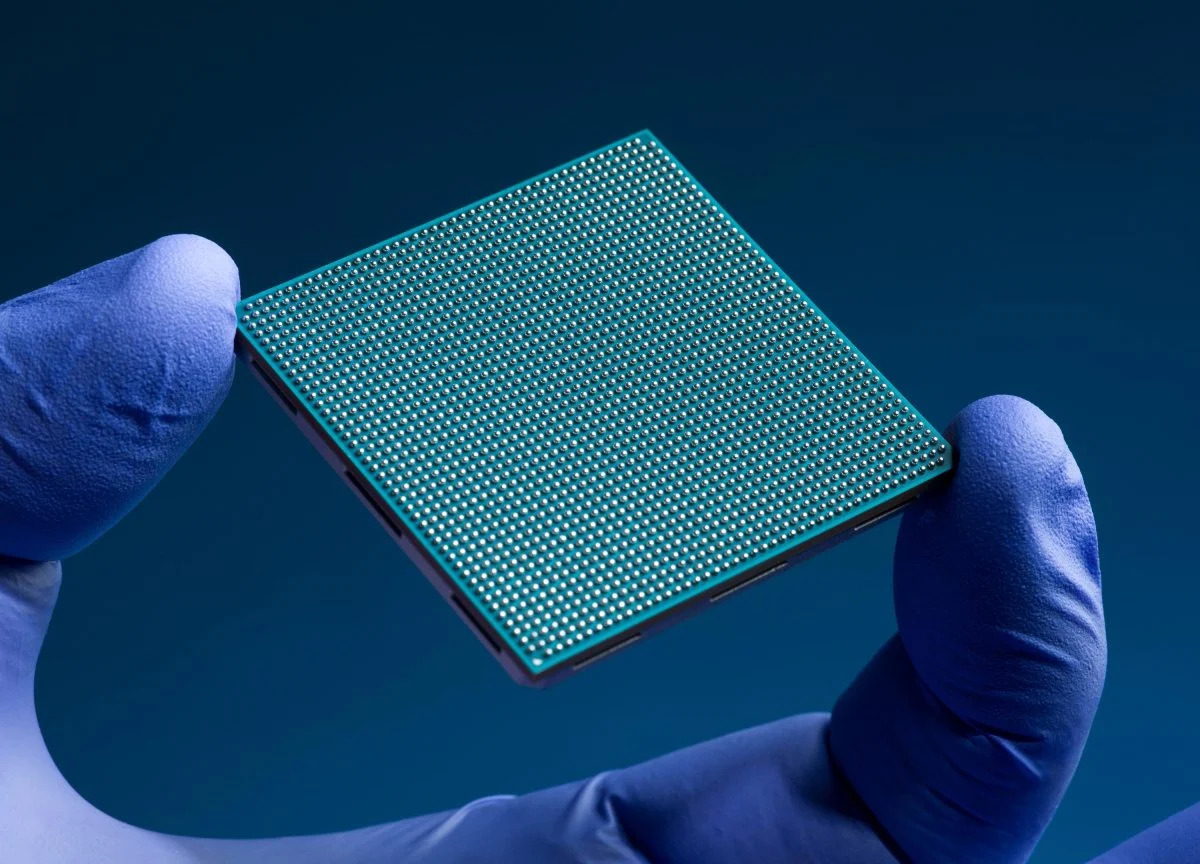
The processor is called a system-on-a-chip (or SoC), that means it integrates the critical additives of a computer into a single compact device small enough to fit within the palm of a hand. It carries vital processing units, computational offloads, advanced networking systems, memory, and input/output interfaces.
SoCs are typically utilized in smartphones and tablets due to the fact they may be compact and energy efficient. Moreover, the versions being examined by JPL are constructed to survive for years in deep space, doubtlessly working millions (or even billions) of miles away from the nearest repair technician under conditions far beyond anything patron electronics would experience.
Once the technology is certified for spaceflight, NASA plans to include the processor into many types of missions, which include Earth orbiters, planetary rovers, crewed habitats, and deep space spacecraft. Microchip also plans to evolve the technology for industries on Earth, such as aviation and automotive production.
NASA and Industry Collaboration
The venture is managed by the Space Technology Mission Directorate’s Game Changing Development (GCD) program at NASA Langley. The GCD program and JPL, that is controlled by Caltech in Pasadena, California, guided the technology from early mission necessities and industry studies via development and delivery. NASA JPL selected on Microchip as a partner in 2022, and the company funded its own research and development work at the processor.