
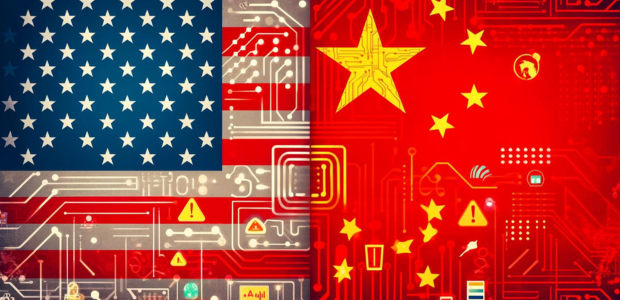
Why has the U.S. Government banned DeepSeek from federal agency systems? The Trump administration has ordered civilian federal agencies to remove technology formed by Chinese AI startup DeepSeek, bringing up national security concerns, potential data relocates to China, and cybersecurity vulnerabilities. The directive also prohibits agencies from buying DeepSeek products and services, including certain third-party solutions constructed using its models.
The Department of Homeland Security (DHS) order, at first issued July 24 and made public October 19, 2026, expands previous federal restrictions on the Chinese AI developer.
DeepSeek Ban Extends Beyond Its AI Chatbot
The order needs federal civilian agencies to eliminate DeepSeek products, technologies developed by affiliated companies, and third-party services that enforce its technology.
Affected organizations consist of the Treasury, State, and Justice departments. The directive does not oversee the Department of Defense or certain national security systems, which fall under separate authorities.
DHS issued the order beneath the Federal Acquisition Supply Chain Security Act of 2018, following recommendations from the Federal Acquisition Security Council.
Agencies searching for exceptions, which includes delayed compliance, should submit written justifications. The order launched in a 60-day window from its original issuance for such requests.
Data Security Concerns Drive Federal Restrictions
DHS diagnosed numerous potential security risks related to DeepSeek’s AI models and applications.
As per the order, DeepSeek’s account registration procedures acquire personally noticeable information, while its China-based infrastructure could reveal sensitive government data to Chinese government.
The agency warned that integrating transmitted information with publicly available datasets ought to generate intelligence about American citizens and federal programs.
DHS also cited research detecting critical security and privacy vulnerabilities in DeepSeek’s iOS application. These findings contributed to wider concerns about possible malware exposure and weaknesses in the company’s technology.
Moreover, the order explains potential threats instead of documenting a specific compromise of federal systems.
What the DeepSeek Ban Means for AI Developers
The restrictions raise crucial questions about models provenance, deployment environments, and third-party dependencies. Organizations increasingly combine external foundation models into applications, automated workflows, and data processing systems. These incorporations unveil security considerations beyond model accuracy or inference performance.
A model deployed through a third-party platform may still fall within the order’s scope if the service executes DeepSeek technology. Consequently, federal AI teams must inspect their software dependencies, detect affected implementations, and assess optional models.
The decision also emphasized a distinction between using a hosted AI service and deploying model weights within controlled infrastructure. While these strategies have distinctive data exposure risks, local deployment does not automatically exempt a DeepSeek implementation from the federal directive.
U.S.-China AI Competition Intensifies
The restrictions follow earlier federal actions against DeepSeek.
In March 2025, Commerce Department bureaus prohibited employees from using DeepSeek on government devices. Congress subsequently presented wider restrictions affecting intelligence community systems.
China has criticized the latest decision, accusing Washington of politicizing technology and expanding national security restrictions. The dispute shows increasing tensions over AI development, infrastructure control, and access to advanced computing technologies.