
Free Quiz
Write for Us
Learn Artificial Intelligence and Machine Learning
  • Artificial Intelligence
  • Data Science
    • Language R
    • Deep Learning
    • Tableau
  • Machine Learning
  • Python
  • Blockchain
  • Crypto
  • Big Data
  • NFT
  • Technology
  • Interview Questions
  • Others
    • News
    • Startups
    • Books
  • Artificial Intelligence
  • Data Science
    • Language R
    • Deep Learning
    • Tableau
  • Machine Learning
  • Python
  • Blockchain
  • Crypto
  • Big Data
  • NFT
  • Technology
  • Interview Questions
  • Others
    • News
    • Startups
    • Books
Learn Artificial Intelligence and Machine Learning
No Result
View All Result

Home » AI Without Rules Is a Global Risk, Warns leading Expert

AI Without Rules Is a Global Risk, Warns leading Expert

Tarun Khanna by Tarun Khanna
June 17, 2025
in Artificial Intelligence, Technology
Reading Time: 3 mins read
0
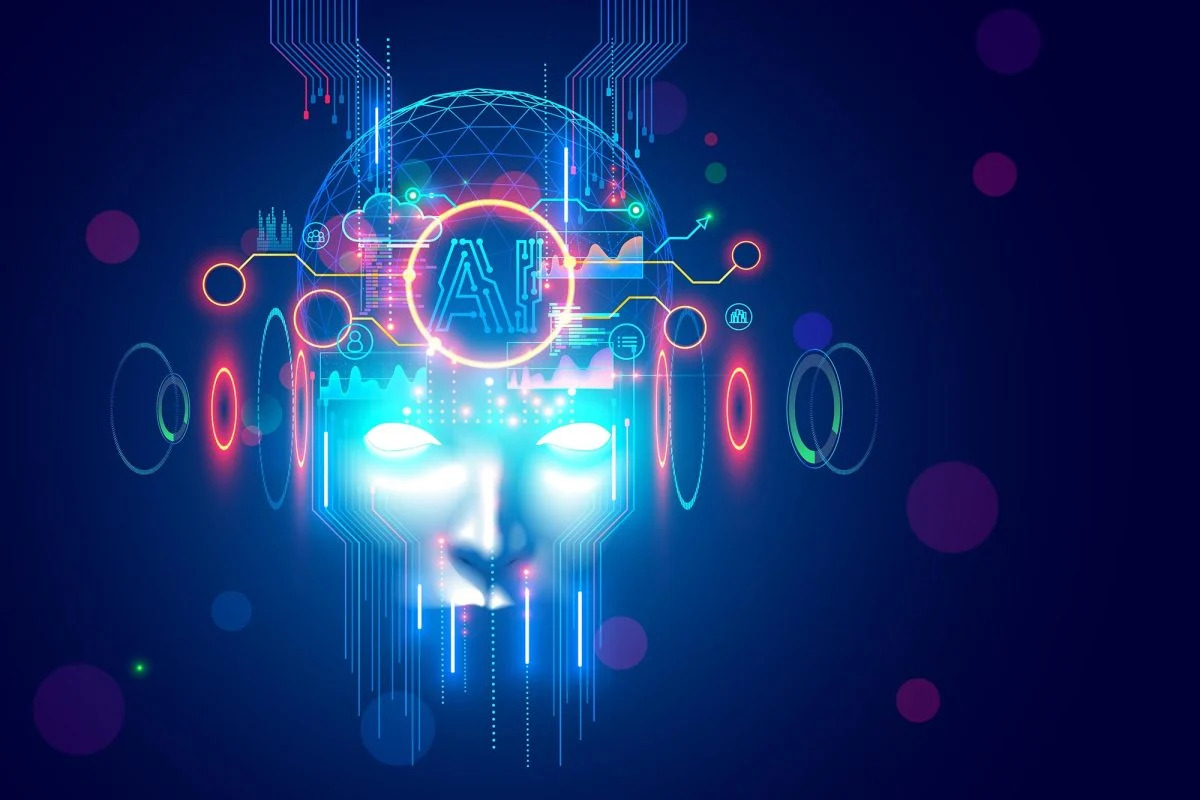
AI Without Rules Is a Global Risk, Warns leading Expert

Photo Credit: https://scitechdaily.com/

Share on FacebookShare on TwitterShare on LinkedInShare on WhatsApp

Professor Shalom Lappin advocates urgent global AI law, IP reform, and group of workers preparedness to make sure AI development serves the general public good, not just corporate interests.

As artificial intelligence quickly reshapes the world, global laws of tech giants, reforms to highbrow property guidelines, and making plans for major shifts in the job market must be on the top of the agenda for global policymakers.

That’s the message from AI expert Professor Shalom Lappin, who gives a powerful case backed by means of research in his new book Understanding the Artificial Intelligence Revolution.

Also Read:

Anthropic IPO Filing Highlights Growing Scrutiny of AI Safety and Regulation

Microsoft Offers Voluntary Buyouts to 60,000 Employees Amid AI Spending Push

Some websites go dark as operators address an AI-detected flaw in a web programming language

AI model hunts down fake news

“The public domain and its citizens need to play a major role in figuring out the framework within which AI technology keeps to develop,” argues Lappin, who holds positions at Queen Mary University of London, King’s College London, and the University of Gothenburg.

Rather than targeting on a far-off sci-fi fears about super intelligent machines, Lappin zeroes in on the actual, instant immediate challenges that AI presents nowadays. These includes corporate power over AI growth, the spread of online misinformation, and the urgent need for smart, proactive policy decisions.

Lappin identifies tech monopolization as a essential concern. Large corporations now dominate AI growth, with tech corporations creating 32 fundamental machine learning of models in 2022 while universities produced only three. This attention of power, he argues, allows corporations to shape research priorities to commercial interests instead of public advantage.

Environmental harm offers another urgent challenge. Training ChatGPT-4 apparently consumed about 50 gigawatt hours of electricity—equivalent to the yearly usage of lots of American households. The production of microchips for AI structures includes toxic chemicals, huge amounts of water, and huge quantities of electricity, with chip factories consuming up to 100 megawatts per hour.

Key Policy Recommendations

To cope with these challenges, Professor Lappin outlines numerous main policy priorities. First, comprehensive global law of tech corporations is important, as individuals nations lack sufficient assets and enforcement powers to deal with those global issues. International trade agreements could offer mechanisms for implementing effective laws.

Second, highbrow property rights should be reformed to ensure rights holders are satisfied when their work is used to train AI systems.

“At a minimal, these corporations have to be required to acquire the consent of the copyright holders for the protected data that they use. In the interests of transparency, they ought to additionally be obliged to listing the materials on which their systems are trained,” notes Lappin.

Tackling AI Bias, Disinformation, and Deepfakes

Lappin also treats extensive bias in AI decision-making structures across healthcare, hiring, and financial services. He shows that effective measures need to be policy-led and enforced to combat disinformation and hate speech online, managing free expression with safety from harmful content, as modern self-rules by tech corporations has proven ineffective.

He argues that disinformation and deepfakes describes a notable threat; as generative AI becomes increasingly sophisticated, distinctive fact from fiction grows more difficult.

“We could soon locate ourselves residing in an environment in which setting apart facts from vicious fiction becomes an increasingly difficult. At that factor, the shared beliefs needed to maintain concord in the public domain start to provide way to doubt, recrimination, and chaos,” Lappin warns.

Finally, governments should prepare for potential widespread job displacement as AI automation increases across diverse sectors. Significant public funding in services and alternative forms of employment may be essential to prevent major social disruption.

“These aren’t matters that we can afford to depart solely to the vicissitudes of the market, and to the tech corporations that play this kind of dominant role in shaping that market,” Lappin concludes.


ShareTweetShareSend
Previous Post

The AI blockchain: What is it in really?

Next Post

Will AI take your job? The solution could hinge on the four S’s of the technology’s benefits over humans

Tarun Khanna

Tarun Khanna

Founder DeepTech Bytes - Data Scientist | Author | IT Consultant
Tarun Khanna is a versatile and accomplished Data Scientist, with expertise in IT Consultancy as well as Specialization in Software Development and Digital Marketing Solutions.

Related Posts

U.S. Bans DeepSeek From Federal Agencies Over AI Security Risks
Artificial Intelligence

U.S. Bans DeepSeek From Federal Agencies Over AI Security Risks

October 22, 2026
U.S. Navy Expands AI Robotics Contract to $300 Million for Fleet Maintenance
Artificial Intelligence

U.S. Navy Expands AI Robotics Contract to $300 Million for Fleet Maintenance

October 21, 2026
Google opens up latest AI models to 200 European researchers
Artificial Intelligence

Google opens up latest AI models to 200 European researchers

October 16, 2026
AI agents develop their very own ‘artificial natural language’ to communicate about complex data
Artificial Intelligence

AI agents develop their very own ‘artificial natural language’ to communicate about complex data

October 16, 2026
Next Post
Will AI take your job? The solution could hinge on the four S's of the technology's benefits over humans

Will AI take your job? The solution could hinge on the four S's of the technology's benefits over humans

Leave a Reply Cancel reply

Your email address will not be published. Required fields are marked *

68 − 63 =

TRENDING

The Machine Learning Libraries Open Sourced by Facebook

The-Machine-Learning-Libraries-Open-Sourced-by-Facebook
by Tarun Khanna
April 19, 2021
0
ShareTweetShareSend

TikTok CEO Predicts Major AI Scientific Breakthroughs Within 3-Years

TikTok CEO Predicts Major AI Scientific Breakthroughs Within 3-Years

Image Credit: https://opendatascience.com/

by Tarun Khanna
October 15, 2026
0
ShareTweetShareSend

Nvidia deepens early-stage push into India’s AI startup ecosystem

Nvidia deepens early-stage push into India’s AI startup ecosystem

Photo Credit: https://techcrunch.com/

by Tarun Khanna
February 20, 2026
0
ShareTweetShareSend

Australia’s proposed laws could support regulate privacy risks from chatbots—if we get the details right

Australia’s proposed laws could support regulate privacy risks from chatbots—if we get the details right

Image Credit: https://techxplore.com/

by Tarun Khanna
October 6, 2026
0
ShareTweetShareSend

U.S. Navy Expands AI Robotics Contract to $300 Million for Fleet Maintenance

U.S. Navy Expands AI Robotics Contract to $300 Million for Fleet Maintenance

Image Credit: https://opendatascience.com/

by Tarun Khanna
October 21, 2026
0
ShareTweetShareSend

Ethics Provision Deal Could Unlock Senate Vote at the Clarity Act

Ethics Provision Deal Could Unlock Senate Vote at the Clarity Act

Image Credit: https://cryptonews.com/

by Tarun Khanna
July 23, 2026
0
ShareTweetShareSend

DeepTech Bytes

Deep Tech Bytes is a global standard digital zine that brings multiple facets of deep technology including Artificial Intelligence (AI), Machine Learning (ML), Data Science, Blockchain, Robotics,Python, Big Data, Deep Learning and more.
Deep Tech Bytes on Google News

Quick Links

  • Home
  • Affiliate Programs
  • About Us
  • Write For Us
  • Submit Startup Story
  • Advertise With Us
  • Terms of Service
  • Disclaimer
  • Cookies Policy
  • Privacy Policy
  • DMCA
  • Contact Us

Topics

  • Artificial Intelligence
  • Data Science
  • Python
  • Machine Learning
  • Deep Learning
  • Big Data
  • Blockchain
  • Tableau
  • Cryptocurrency
  • NFT
  • Technology
  • News
  • Startups
  • Books
  • Interview Questions

Connect

For PR Agencies & Content Writers:

connect@deeptechbytes.com

Facebook Twitter Linkedin Instagram
Listen on Apple Podcasts
Listen on Google Podcasts
DMCA.com Protection Status

© 2024 Designed by AK Network Solutions

Welcome Back!

Login to your account below

Forgotten Password?

Retrieve your password

Please enter your username or email address to reset your password.

Log In
No Result
View All Result
  • Artificial Intelligence
  • Data Science
    • Language R
    • Deep Learning
    • Tableau
  • Machine Learning
  • Python
  • Blockchain
  • Crypto
  • Big Data
  • NFT
  • Technology
  • Interview Questions
  • Others
    • News
    • Startups
    • Books

© 2023. Designed by AK Network Solutions