On this page
Artificial intelligence helped Covid-19 vaccine efforts by analyzing huge amounts of data, studying the virus’s proteins and supporting distribution and safety monitoring. It could not replace clinical trials, but it sped up work that depends on finding patterns in data.
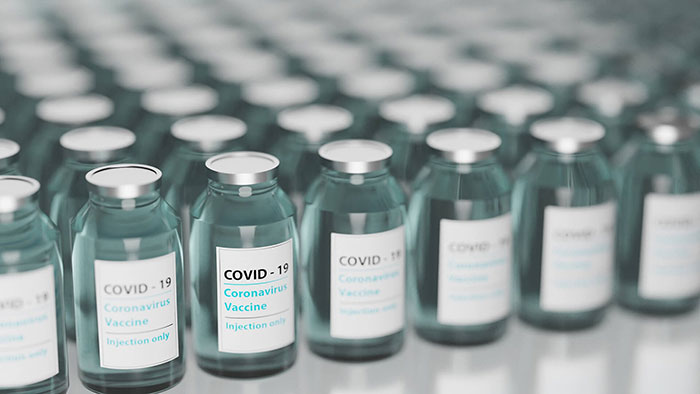
More than 200 viruses are known to infect humans, and each differs in its mechanisms, behavior and treatment. Developing a vaccine is a data-intensive effort, starting with collecting and analyzing the data needed to understand both the virus and the immune system’s response. AI, as an adaptive and predictive technology, was in demand for this from the pandemic’s earliest days.
Key takeaways
- AI analyzed large volumes of data and scientific papers to support vaccine design.
- It helped identify parts of the virus, such as the spike protein, likely to trigger an immune response.
- AI cannot replace human and animal trials or guarantee trial success.
- Digital tools were used for vaccine supply chains and adverse-effect monitoring.
- AI also supported other pandemic needs, from temperature screening to online teaching and drone delivery.
How did AI help design Covid-19 vaccines?
AI was used to analyze billions of data points and thousands of scientific papers. Machine learning and computational analysis helped researchers study the virus and its structure, and predict which of its components would elicit an immune response. That prediction is a major step in vaccine design.
One major role was studying the proteins that make up the virus, including the spike protein. By examining its complex structure, an AI system could sift through thousands of candidate components to find those most likely to trigger a strong immune response.
Large technology firms, including IBM, Amazon, Google and Microsoft, contributed computing power to the COVID-19 High Performance Computing Consortium and AI for Health.
What is special about the mRNA vaccines?
Pfizer and Moderna developed a new type of vaccine, helped by advances in nanotechnology. These vaccines contain a small fragment of SARS-CoV-2 mRNA, its genetic material, which encodes the spike protein. The spike protein is the part of the virus that lets it enter host cells. It forms the crown-like projections that give the coronavirus family its name.
Vaccines can protect at-risk individuals, and the ultimate goal is herd immunity within a community.
What can AI not do?
AI cannot replace animal and human trials, speed up the most time-consuming part of vaccine development, or predict exactly how human trials will turn out. What it can do is study the large volume of data those experiments produce, looking across many parameters for patterns a person might miss. Scientists, health care workers and participants still need to report their experiences with a vaccine in real time to help AI learn.
How is AI used in vaccine distribution?

AI and other digital tools were deployed to manage complex vaccine supply chains and to collect the large volume of data needed for tracking. Directing logistics, tracing, storage and stock management is a major challenge for global deployment. The original article said AI would likely play a big role in supply chain management, but drug manufacturers were only starting to explore it.
The U.K. was among the first countries to distribute the vaccine. According to Johns Hopkins University data cited at the time, it was among the hardest-hit countries, with over 3.2 million confirmed cases and nearly 85,000 deaths. Tracking any adverse effects across millions of people is a demanding task.
To help, the U.K. Medicines & Healthcare products Regulatory Agency (MHRA) partnered with the U.K. arm of Genpact, a professional services firm focused on digital transformation. The company combined components of its AI software with the government website where adverse effects can be reported.
How else did AI help during the pandemic?
| Area | Use of AI |
|---|---|
| Healthcare facilities | NCS used AI-powered thermal cameras in public healthcare facilities in Singapore, reducing manual temperature checks with handheld scanners. They were integrated with visitor and employee management and contact tracing systems. |
| Education | AI tools support teachers in online settings and can act like a human tutor for students’ needs. |
| Delivery | Drones with AI enable contactless delivery. Wing offered drone deliveries in a small number of places, including Virginia, Finland and Australia, at speeds of around 65 mph. |
In education, the original article suggested e-learning could cut costs and might eventually reduce student debt. That outlook is speculative.
Frequently asked questions
Can AI replace clinical trials for vaccines?
No. AI cannot replace animal and human trials or predict their outcomes precisely. It can analyze the data from them and find patterns.
What part of the virus did AI help study?
AI studied the proteins that make up the virus, especially the spike protein, to find components likely to trigger an immune response.
Which companies supported Covid-19 research with computing power?
IBM, Amazon, Google and Microsoft donated computing power to the COVID-19 High Performance Computing Consortium and AI for Health.
How did the U.K. use AI for vaccine safety?
The MHRA worked with Genpact’s U.K. arm to combine AI software with the government site where adverse effects are reported.
Conclusion
AI contributed to Covid-19 vaccine design, distribution and safety monitoring, while human trials remained essential. The original article expected it to become an integral tool for medical researchers within a decade. That view is a forecast, not an established fact.